In 2024, the world spent an estimated USD 2.87 trillion on research and development, nearly tripling in real terms over the past 25 years. It is the largest sustained collective bet on creativity in human history. And yet, as we move through 2026, an uncomfortable corollary has become impossible to ignore: most of that spending never becomes commercial value.
The gap between input and outcome is not a creativity gap. It is a systems gap.
The era of innovation-by-osmosis, where you fund an R&D department, wait, and hope something marketable emerges, is closing. In its place, a different operating model is taking hold. Innovation is becoming a structured, measurable, cross-functional business discipline, operated with the same rigor as supply chain or finance. The market is responding. According to Precedence Research’s 2026 outlook, the global innovation management systems market reached USD 2.77 billion in 2025 and is projected to expand to USD 10.77 billion by 2035, a 14.55% compound annual growth rate driven primarily by enterprises that have stopped treating innovation as a department and started treating it as a system.
From Black Box to Operating System
For decades, the dominant model treated innovation as a black box belonging to R&D. Money went in. Eventually, products came out. The pattern fails reliably. CB Insights’ 2024 analysis of 431 failed venture-backed companies found that 43% died from poor product-market fit, the leading single cause of startup failure across two decades of post-mortem research. Translated: the most expensive way to build the wrong thing is in isolation.
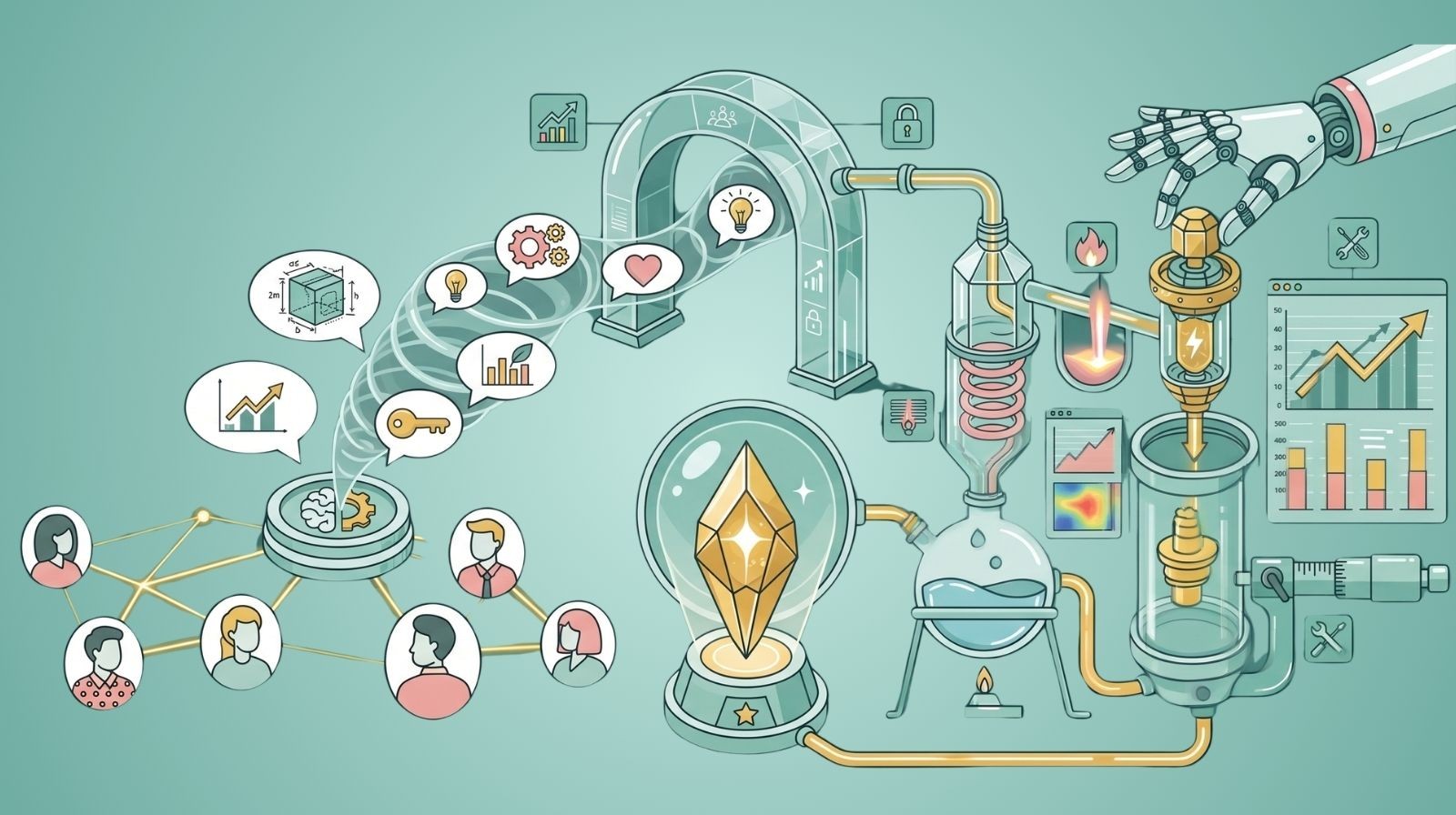
The structural fix is not more R&D budget. It is the dismantling of the R&D silo itself. High-functioning innovation organizations now treat ideation, validation, feasibility, and go-to-market as a single integrated workflow. Marketing, finance, operations, and sales become participants from the earliest concept stage, not gatekeepers waiting at the end of the funnel. The role of innovation management software in this model is to provide the connective tissue: a single source of truth where a customer insight, a feasibility study, and a regulatory review belong to the same conversation, with the same data and the same accountability.
This is the practical meaning of "operating discipline." Innovation stops being an event and becomes a process, with handoffs, owners, gates, and metrics.
The Bottom-Up Engine
The second structural shift is harder to instrument but no less important. Top-down innovation, where a small executive group decides what the future looks like, creates a predictable bottleneck: the people closest to the customer have no formal channel to influence the pipeline. Decentralization fixes that.
Gallup’s Q12 meta-analysis, drawn from more than 82,000 business units across industries, finds that organizations in the top quartile of employee engagement are 21% more profitable, 17% more productive, and record 70% fewer safety incidents than bottom-quartile peers. The mechanism is not mysterious. Engaged employees, given a structured channel, generate higher-volume, higher-signal ideation than any executive offsite ever produces.
Crowdsourcing platforms, internal ideation challenges, and structured open-innovation programs convert that latent capacity into an actual pipeline. The question is no longer whether the workforce has good ideas. Decades of research have settled that. The question is whether the organization has built the plumbing to capture, evaluate, and act on them at the scale they arrive.
Measuring What Was Unmeasurable
The hardest historical objection to innovation investment was ROI. "How do you put a KPI on a dream?" In 2026, that question has answers. Modern innovation management platforms surface metrics that were structurally invisible ten years ago: time-from-insight-to-decision, idea-to-launch velocity, projected portfolio value versus actual R&D spend, and contributor-level participation patterns that identify the hidden champions whose ideas consistently make it into shipped products.
The implication for performance management is direct. When contribution to commercial outcomes is measurable at the individual level, innovation can be linked to recognition, advancement, and compensation. That feedback loop is what converts a one-time engagement initiative into a durable cultural shift. ISO 56002, the international standard for innovation management systems, calls this loop out explicitly as a structural requirement for sustained innovation performance.
The 2026 Mandate
The defining feature of the next decade will not be who has the best ideas. Every serious organization will have access to roughly the same talent markets, the same external research, and similar AI tooling. The differentiation will sit in the operating model. How fast does an idea travel from a customer conversation to a shipped product, and how reliably does that journey repeat?
Innovation in 2026 isn’t a creativity problem. It’s a logistics problem.
The companies that internalize this and operate accordingly will treat innovation management not as a cost center, but as the same kind of foundational infrastructure they already accept for finance, payroll, and supply chain. The rest will keep running the lottery, and keep wondering why the trillion-dollar global R&D pile produces so few breakthroughs.
Innovation Cloud helps enterprise teams move from siloed R&D to structured, ISO 56002-aligned innovation operations, with a single source of truth from concept to market.